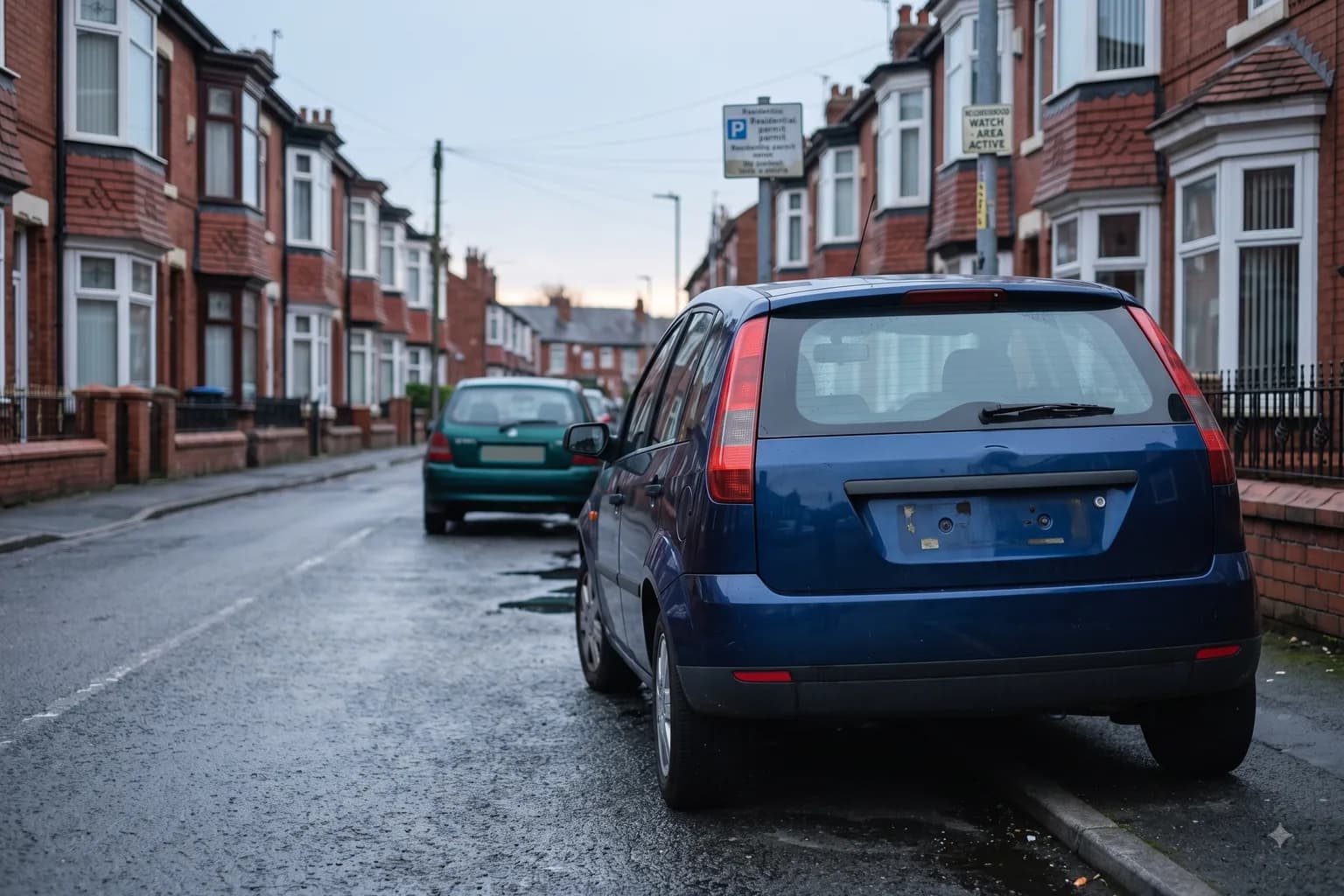
A cloned number plate rarely announces itself. It usually appears as a congestion charge notice, a parking fine from a town you have never visited, or a police query that lands without warning. That is why secure vehicle credential storage matters. It is not an abstract security feature. It is the control layer that helps prove a plate’s legitimacy, track suspicious duplication and protect a vehicle’s identity before fraud spreads.
For UK drivers, fleets and number plate suppliers, the issue is straightforward. A registration mark is more than a legal identifier fixed to a vehicle. It is a credential tied to ownership, compliance, enforcement and trust. If that credential is copied, misused or reproduced without authorisation, the consequences can move quickly from inconvenience to financial loss and legal stress.
What secure vehicle credential storage actually means
Secure vehicle credential storage is the protected handling of the key records that validate a vehicle plate and its authorised use. That includes registration details, plate issue records, supporting verification data and the audit trail around when a plate was created, registered or checked.
In practice, the goal is not just to store data. It is to store it in a way that preserves integrity, limits unauthorised access and supports rapid verification when something looks wrong. If a motorist receives a penalty linked to cloned plates, or a manufacturer needs to confirm whether a plate is already registered, the stored credential record needs to be accurate, encrypted and immediately usable.
That distinction matters. Basic storage keeps information somewhere. Secure storage protects the information, records how it is used and helps detect suspicious activity around it.
Why number plate fraud makes storage a security issue
Number plate cloning is often treated as a roadside crime problem, but the deeper weakness usually sits in verification and record control. If there is no trusted record of a plate’s credential history, fraud becomes easier to carry out and harder to challenge.
A cloned plate can be used to avoid tolls, parking charges, ULEZ or CAZ fees, or to mask criminal activity. The innocent registered keeper then has to spend time proving they were not responsible. Without a secure credential record, that proof process can become slow and fragmented.
This is where secure vehicle credential storage shifts from being an administrative function to a protective one. It gives vehicle owners and authorised providers a reliable reference point. When records are encrypted, time-stamped and tied to verification workflows, there is a far stronger basis for detection and response.
Secure vehicle credential storage and plate verification
Verification is only as strong as the data behind it. A plate status check, for example, has limited value if the underlying record can be altered casually, duplicated without trace or accessed by the wrong party.
Effective secure vehicle credential storage supports verification in three ways. First, it protects the original registration and plate issue data so it remains trustworthy. Second, it creates an audit trail, showing when records were entered, reviewed or flagged. Third, it allows authorised parties to check plate status quickly when duplication is suspected.
For private motorists, that means a better chance of acting early rather than waiting for fines to stack up. For fleet operators, it means tighter control over vehicle identity across multiple assets. For plate manufacturers, it means a more defensible registration workflow and clearer evidence of compliance.
What strong storage should include
The phrase sounds technical, but the fundamentals are practical. Secure vehicle credential storage should centre on encryption, controlled access and traceability.
Encryption is the first layer. If vehicle and plate credentials are stored in plain or poorly protected formats, the records themselves become a target. Encryption helps ensure that even if systems are probed, the underlying data remains protected.
Access control is just as important. Not everyone in a business should see every record, and certainly not edit it. Good systems restrict permissions based on role, so a customer, administrator or manufacturer only accesses what they genuinely need.
Traceability is what turns storage into a security tool. A proper audit trail shows who did what and when. That matters when investigating fraud, resolving disputes or proving that a plate credential was registered correctly in the first place.
There is also the issue of speed. Security controls should not create so much friction that alerts, checks and interventions are delayed. In this area, protection and responsiveness need to work together.
The trade-off between convenience and control
There is always a balance to strike. The simplest systems are often the easiest to use, but simplicity can come at the cost of weak verification or broad access permissions. On the other hand, an over-engineered system can slow down legitimate users and create operational bottlenecks.
The right answer depends on who is using it. A private driver may prioritise straightforward registration and instant alerting. A plate manufacturer may need stronger workflow controls, approval checkpoints and more detailed record handling. A fleet operator may need both, with added visibility across many vehicles.
That is why secure vehicle credential storage should be designed around real-world risk, not just technical preference. The objective is controlled access with fast verification, not complexity for its own sake.
Why real-time alerting changes the picture
Storage on its own is defensive. Storage plus monitoring is active protection.
If suspicious duplication activity is detected against a registered plate, delay is the enemy. The longer a cloned plate remains in circulation, the greater the chance of enforcement notices, reputational issues or deeper criminal misuse. Real-time alerting turns stored credential data into an early warning system.
That is where a platform approach has an advantage. When registration, detection and alerting sit within the same controlled environment, a suspicious event can be checked against the stored credential record immediately. That shortens the response window and gives the keeper a better chance to act before the matter escalates.
For many motorists, this is the missing piece. Traditional responses often start after damage is done. Secure credential storage linked to detection starts earlier, with prevention in mind.
What this means for everyday drivers
Most vehicle owners do not spend much time thinking about credential infrastructure, and they should not have to. What they care about is whether they can protect their registration from misuse and respond quickly if something goes wrong.
From that perspective, secure vehicle credential storage offers three direct benefits. It helps establish a trusted record of a plate’s status, supports faster challenge and verification if fraud occurs, and reduces the uncertainty that comes from fragmented paperwork and delayed responses.
That matters whether you drive a family car, a company van or a prestige vehicle. Plate cloning does not only affect one type of owner. What changes is the scale of disruption. For a private motorist, it may mean stress and wasted time. For a business, it can affect operations, driver management and customer confidence.
Why suppliers and fleets should take this seriously
For plate manufacturers and fleet operators, the stakes are broader. They are not just protecting a single registration. They are managing process integrity across multiple touchpoints.
A manufacturer needs confidence that plate registration workflows are secure, compliant and resistant to misuse. A fleet operator needs visibility across many vehicle identities, often with limited time to investigate anomalies. In both cases, secure vehicle credential storage helps create a controlled framework for registration, verification and response.
It also supports accountability. When records are stored securely and checked consistently, it becomes much easier to demonstrate that the correct steps were followed. That is valuable in disputes, audits and fraud investigations alike.
Choosing a system that does more than store data
Not every security platform is equal. Some tools act as passive repositories. Others are built to detect risk, verify status and issue alerts as part of the same process. The second model is far more useful where plate cloning and unauthorised duplication are genuine threats.
A credible system should combine encrypted storage with live monitoring, clear audit trails and rapid notification. It should be simple enough for users to act on, but controlled enough to preserve trust in the underlying data. Protect A Plate is built around that exact security-led approach, giving drivers and authorised stakeholders a way to register, detect and respond with greater certainty.
The key question is not whether your vehicle details are stored somewhere already. The question is whether they are stored securely, checked intelligently and ready to support you the moment something looks wrong.
Vehicle identity fraud is rarely convenient, fair or predictable. But it is easier to contain when your plate credentials are protected from the outset, not pieced together after the fact. If your registration is part of how your vehicle proves who it is, its security deserves the same level of protection as the vehicle itself.