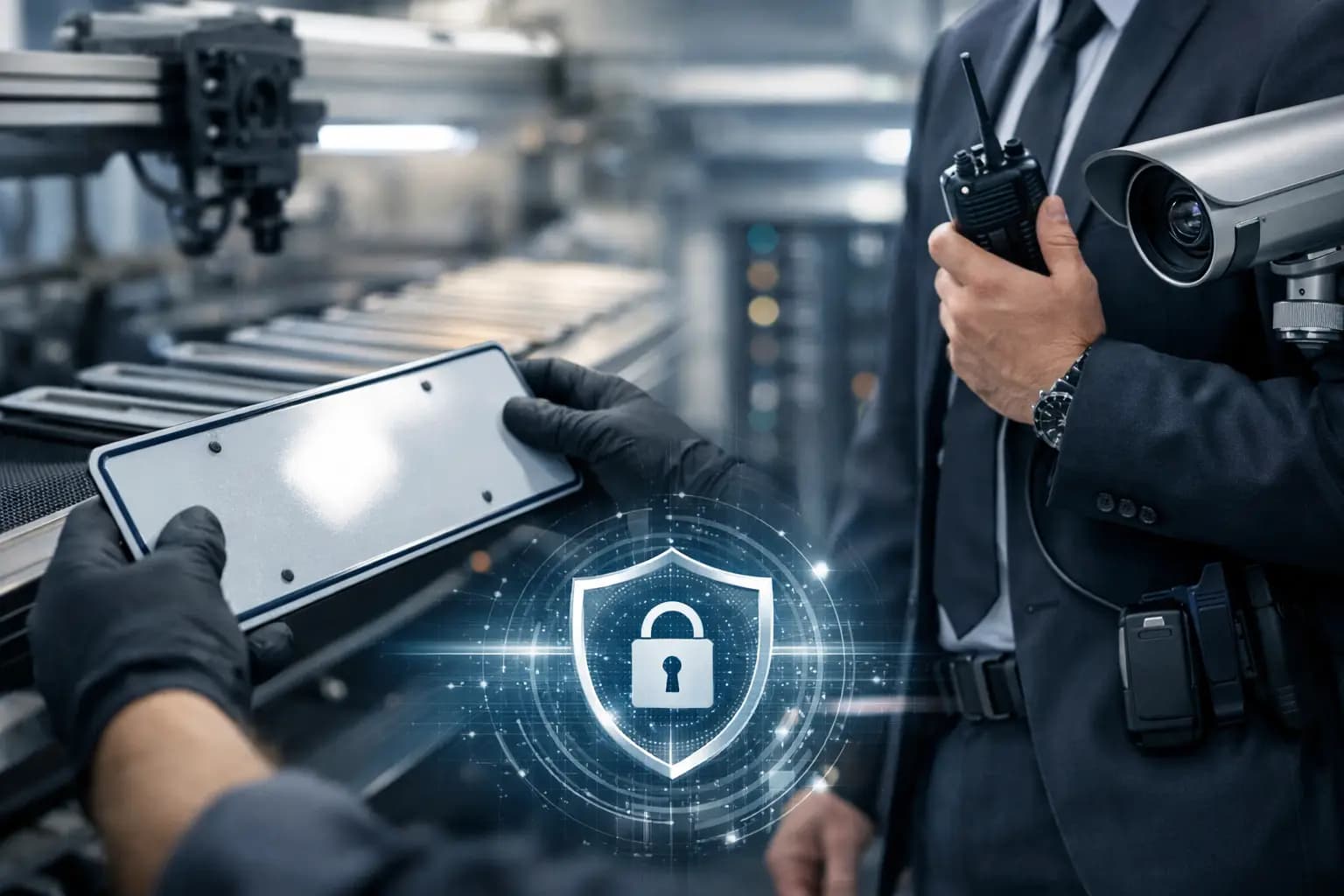
A cloned plate does not start with the driver who receives the fine. It starts much earlier, at the point where a registration can be copied, reproduced or passed through a weak process without challenge. That is why plate manufacturer security matters. If the manufacturing stage is not protected, every later safeguard is left dealing with damage after the fact.
For UK plate suppliers, this is no longer a background compliance issue. It is a live security responsibility. Drivers want proof that their identity is being protected, fleet operators want tighter control over risk, and manufacturers need systems that do more than record a transaction. They need to verify, detect and flag suspicious activity before an illegitimate duplicate enters circulation.
Why plate manufacturer security matters now
Number plate cloning is not a minor nuisance. It can trigger penalty notices, congestion charges, parking claims, police stops and reputational damage for innocent motorists. For commercial operators, the impact can spread across administration teams, insurance queries and operational downtime. When a plate is duplicated unlawfully, the consequences move quickly.
Plate manufacturers sit at a critical control point. They are one of the few parties in the supply chain with a direct opportunity to challenge suspicious requests before a plate is produced. That position carries both risk and value. If controls are weak, criminals look for gaps. If controls are strong, duplication becomes harder, more visible and easier to investigate.
The old model focused heavily on document checking and record keeping. Those basics still matter, but they are not enough on their own. Fraud adapts. A copied identity, a forged entitlement document or a repeat request that looks plausible at first glance can still pass through a manual process if there is no wider visibility behind it.
What effective plate manufacturer security actually looks like
Good security is not about adding friction everywhere. It is about placing strong checks at the moments that matter most. For plate manufacturers, that usually means a controlled workflow around registration, identity verification, production records and alerting.
A secure process should create a traceable record of who requested the plate, what evidence was provided, when it was produced and whether that registration has shown any signs of suspicious duplication elsewhere. That matters because a plate is not just a physical item. It is a vehicle identity marker with legal and financial consequences attached.
The strongest systems also move beyond static record storage. They allow manufacturers to check plate status, log production activity into an encrypted tracking environment and receive alerts when the same registration appears in a way that suggests misuse. That turns the manufacturer from a passive supplier into an active part of the defence layer.
There is a practical balance to strike here. A process that is too light leaves the door open. A process that is too slow frustrates legitimate customers and adds cost to the business. The right answer is usually not more paperwork. It is better visibility, tighter controls and faster exception handling.
Plate manufacturer security and compliance are not the same thing
Compliance is essential, but it is only the starting point. A manufacturer can meet baseline obligations and still lack meaningful protection against cloning. That is because compliance tends to confirm that a process exists, while security tests whether that process can resist misuse.
For example, a supplier may correctly retain customer records and verify documents at point of sale. That satisfies part of the legal requirement. But what happens if the same registration appears again through a separate channel, with similar supporting evidence and no obvious red flag to a staff member under time pressure? Without connected intelligence, that second request may not look unusual.
Security-led manufacturing introduces context. It asks whether this registration has been seen before, whether the request pattern is credible and whether there are grounds to trigger a manual review or instant alert. That difference is where many fraud prevention gains are made.
For manufacturers, this approach also protects the business itself. It reduces the likelihood of being linked to unauthorised duplication, supports defensible audit trails and demonstrates that the company takes a proactive stance rather than relying on minimum process alone.
Where manufacturers are most exposed
Most weaknesses appear in ordinary operational moments rather than dramatic breaches. A rushed handover, incomplete document review, fragmented records or disconnected ordering channels can all create openings. Fraud often succeeds because a process looks routine.
Remote requests can be especially sensitive. If part of the workflow depends on emailed documents, verbal confirmations or inconsistent staff judgement, risk rises quickly. The same applies when production data sits in one place, customer records in another and no status checking exists between them.
Repeat manufacture is another pressure point. Some repeat orders are legitimate. Plates are damaged, vehicles are sold and businesses update assets. But repetition without cross-checking can also mask duplication. A secure system needs to distinguish normal replacement activity from patterns that deserve scrutiny.
This is where proprietary tech has a clear role. Automated registration tracking, plate status verification and instant alerts create a faster response than manual review alone. Staff still matter, but they perform better when the system gives them evidence, context and control.
The role of registration, detection and alerting
The most effective security model is simple in structure even when the technology behind it is advanced. First comes registration. The manufacturer logs the plate creation event with verified details in a secure environment. That establishes a reliable reference point.
Next comes detection. If the same registration appears again, or if suspicious behaviour is identified around duplication attempts, the system can compare against the original record. Detection is what turns data into protection. Without it, records are just archives.
Then comes alerting. Speed matters when misuse is suspected. An instant notification allows the relevant party to review the case before the issue grows. That may mean checking the legitimacy of a repeat order, contacting the registered user or escalating internally for investigation.
For plate manufacturers, this model brings operational clarity. Teams know what to record, what to verify and what should trigger action. For drivers and fleets, it adds confidence that someone is actively watching for misuse rather than waiting for a penalty to arrive weeks later.
Why trust is now part of the product
A plate supplier is no longer judged only on turnaround time and legal formatting. Trust has become part of the offer. Customers want to know that the business producing their plate takes identity misuse seriously and has the systems to prove it.
That is particularly relevant for fleets and security-conscious motorists. They are not only buying a compliant plate. They are buying confidence that their registration is less exposed to unauthorised duplication. In a market where cloning creates real cost and stress, that reassurance has commercial value.
It also shapes reputation. A manufacturer with clear security controls can differentiate on more than price. They can show that they are protecting the vehicle identity from the moment of production. That is stronger than a reactive promise to help after a problem has already caused disruption.
For businesses operating at scale, the case is even clearer. A single weak process multiplied across hundreds or thousands of transactions creates a bigger attack surface. Security infrastructure helps standardise decision-making and reduce dependence on memory, assumptions or inconsistent local practice.
Choosing a stronger approach to plate manufacturer security
The right solution should fit the way manufacturers actually work. It needs to support speed at the counter, clarity for staff and visibility across the lifecycle of the registration. It should also provide evidence that is easy to review when questions arise.
That means looking for systems built specifically around number plate risk, not generic admin software repurposed for the task. Plate manufacturer security works best when it is designed around registration events, duplication checks, searchable plate status and rapid alerting. Those are the moments where fraud is either stopped or missed.
It also means recognising that no single control solves everything. Document checks, audit trails, encrypted records and live alerts all have a role. The value comes from how they work together. If one layer is bypassed, another should still have a chance to detect the anomaly.
Protect A Plate is built around that principle - registration, detection and alerting working together in one controlled environment. For manufacturers, that creates a clearer route to compliance, stronger fraud prevention and better protection for the drivers who trust them.
The pressure on plate suppliers is only going in one direction. More scrutiny, faster fraud and less tolerance for preventable failures. The manufacturers who act early will not just reduce risk. They will set the standard for what secure plate supply should look like in the UK.